Twenty-five years after spending months working at Ground Zero in the aftermath of the September 11 attacks, retired NYPD officer Joe Gomes found himself needing the same kind of lifesaving help he once gave others.
On September 11, 2026, the 64-year-old Royal Palm Beach resident was playing in an annual first responder hockey tournament at the Florida Panthers IceDen in Coral Springs when he suddenly suffered cardiac arrest. His fellow players, firefighters and paramedics from several agencies reacted instantly, starting CPR within about a minute and even using an automated external defibrillator (AED) to restore his heart rhythm.
Coral Springs-Parkland Fire Rescue rushed him to Broward Health Coral Springs, where he suffered a second cardiac event in the ER and a third just before an emergency procedure. Ashraf El Shalakany, M.D., an interventional cardiologist, found an acute blockage in one of Gomes’ coronary arteries and performed an angioplasty and stent procedure to restore blood flow, saving his heart muscle from suffering any lasting damage.
Gomes’ survival highlights the “Chain of Survival”: early recognition and calling for help, immediate CPR, rapid defibrillation, advanced emergency care, quick hospital treatment and recovery support.
Gary Lai, D.O., chief of emergency medicine at Broward Health Coral Springs, said the case showed what’s possible when “every single minute counts” and encouraged everyday people to learn CPR and AED use.
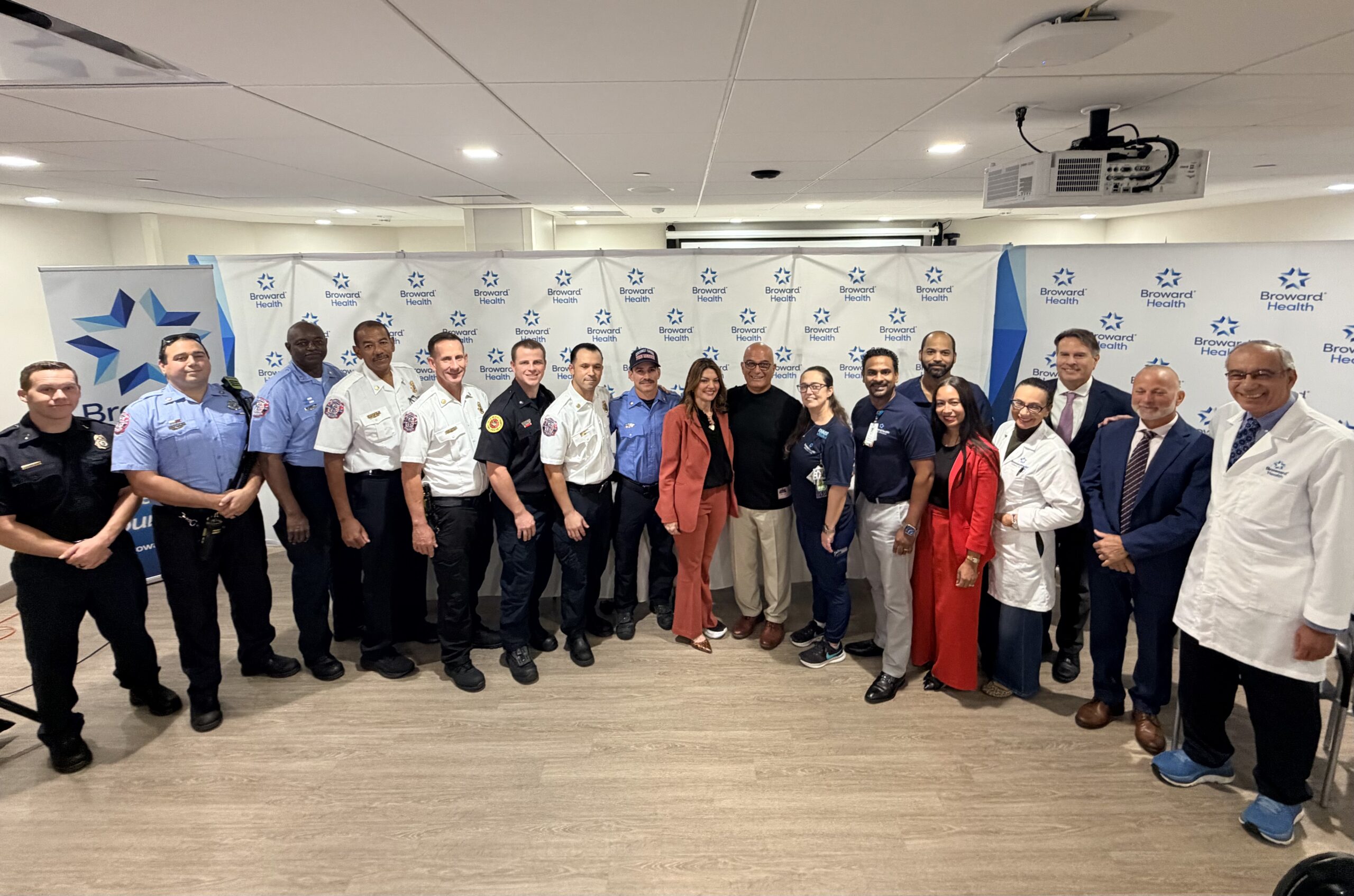
Remarkably, Gomes was discharged the next day with no neurological damage and only minimal heart damage. Recently, Gomes came back to the hospital for a press conference that reunited him with the first responders and medical team who saved him, calling the care he received simply “incredible.”
A quarter-century after helping others at Ground Zero, Gomes experienced firsthand what it was like to be on the receiving end of lifesaving care.