
By Shellie Miller-Farrugia
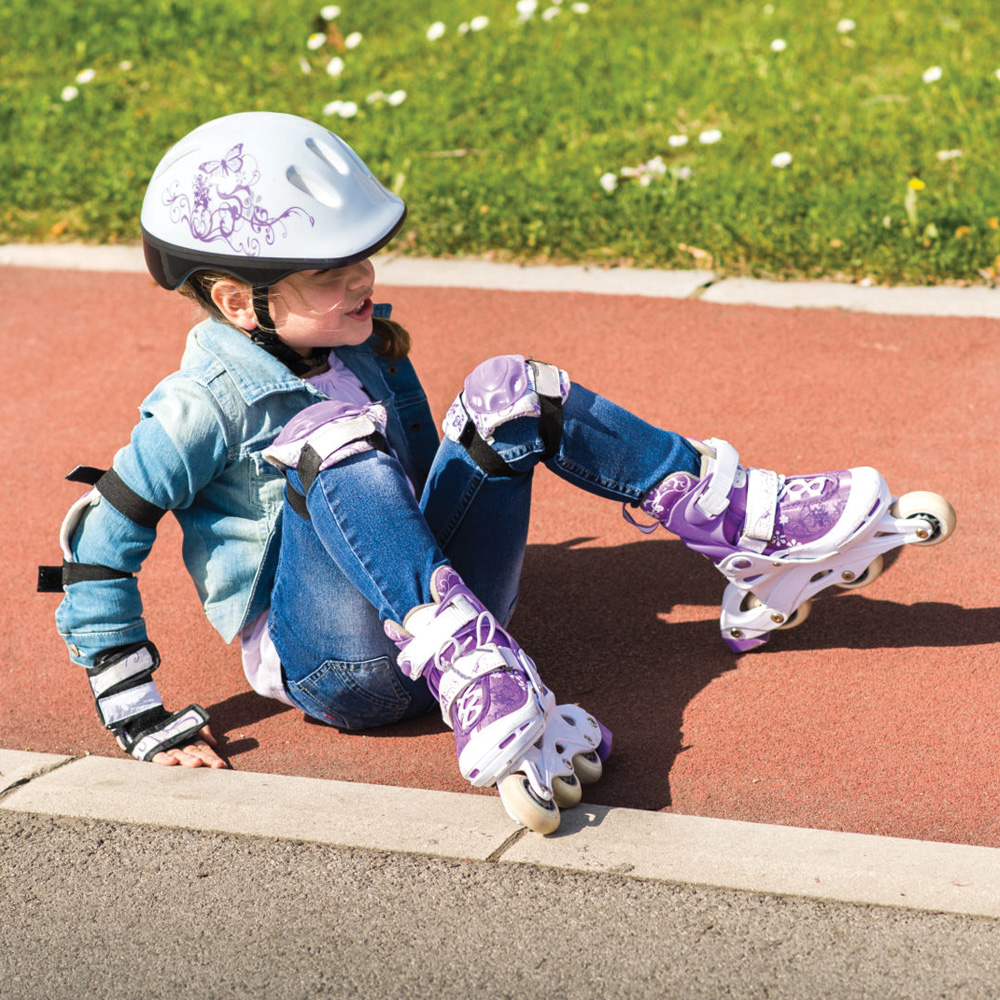
The other day I watched as some children were rollerblading near my home. The first child skated over a small indention in the sidewalk and was brought to an immediate stop. She scraped her knees and then picked herself up. As I watched, I felt the pain she experienced as she fell down, ouch, and then I thought about all of the times I have fallen down in life and scraped my knees. I thought about the times that I embraced the mishap and learned not to repeat that mistake. It also reminded me of the times that I fell down and quickly blamed the situation, the world, or the darn sidewalk for the mishap.
Life will always bring us to places where we find ourselves with scraped knees. The question we must ask ourselves is what we can learn from the experience. If we are courageous enough to acknowledge that all of life’s events are teaching moments, we quickly find life to be exciting. Yes, some of the lessons will hurt a bit, like the little girl’s knees, but there is always an opportunity to glean positive lessons from our mishaps.
The best part of this story is what the young girl did after she picked herself up from the sidewalk. This brave young girl stood up and waved her arms to the child that was approaching the same treacherous part of the sidewalk. She stood in between the child and the soon to be painful experience would encounter if she continued on her intended path. Thankfully, the other child saw her friend waving her arms and stopped just short of the obstacle and was saved from scraping up her knees.
The first child’s actions reinforce a great lesson for all of us. Mistakes will always happen, knees will get skinned, our pride will be fractured, but what we do with that information and experience is what can set us apart in our community. When we acknowledge the fact that pain occurs to teach us or remind us of what we do not want, we are then in a place to use that experience to help someone else to avoid the same result of our mistake. Like the young girl who fell and then used her experience to save her friend from the same misfortune, you can also embrace all of your mistakes, learn from them, and then give someone in your life a great gift. Help them to avoid the same mistake you made. This week I challenge you to think about this, and then act on it! Use your life and experiences to be a spring board for someone else’s success. As you do this, you will be reinforcing a great habit in life that will bring you and the folks around you a lot of joy.
Your article helped me a lot, is there any more related content? Thanks!
Thanks for sharing. I read many of your blog posts, cool, your blog is very good.
Your article helped me a lot, is there any more related content? Thanks! https://www.binance.bh/register?ref=IHJUI7TF
Thank you for your sharing. I am worried that I lack creative ideas. It is your article that makes me full of hope. Thank you. But, I have a question, can you help me? https://www.binance.com/en/register?ref=IU36GZC4
I don’t think the title of your article matches the content lol. Just kidding, mainly because I had some doubts after reading the article. https://accounts.binance.bh/zh-CN/register?ref=DCKLL1YD
I don’t think the title of your article matches the content lol. Just kidding, mainly because I had some doubts after reading the article. https://www.binance.bh/futures/ref?code=JW3W4Y3A
A practical UPS decision starts with the actual load, the equipment’s tolerance for downtime, and the runtime needed to shut down safely or bridge an outage. Battery Backup Picker is useful for turning those variables into a clearer comparison: wattage capacity should leave headroom, while runtime estimates need to account for the connected devices rather than the UPS label alone. Shoppers should also distinguish standby, line-interactive, and online units, especially where power quality or sensitive network gear is involved.
Visual planning is most useful when it records decisions, not just attractive images. A tattoo consultation checklist can include intended placement, approximate size, style references, must-have symbols, elements to avoid, and questions about healing or future additions. Bringing those notes alongside a few concept images makes it easier to explain priorities while leaving room for the artist to recommend changes that improve flow, durability, and clarity on skin.
A Character Comparison Dataset is most useful when it records more than a glyph’s appearance. Similar marks should be compared by code point, name, category, typical context, and how they render across common fonts. That structure makes near-duplicate characters easier to distinguish for documentation, interface work, and text cleanup. Clear examples of list markers, separators, operators, and emoji-style dots would also make the dataset more useful for people choosing a character intentionally rather than by visual guesswork.
Identifying an unfamiliar track is easier when the search accepts more than one kind of clue. song recognition can work from a remembered tune, a sung or whistled hook, a recording, or a short uploaded clip. That flexibility matters when lyrics are unclear, the original audio is brief, or only the melody has stuck. A useful habit is to isolate the most recognizable few seconds, reduce background noise where possible, and treat the first suggestions as candidates to verify rather than final answers.
Your article helped me a lot, is there any more related content? Thanks!